.jpg)
Lego Animal Alphabet Slideshow - Mrs. Ream's Class
Lego Animal Alphabet Slideshow - Miss Martin's Class
Lego Animal Alphabet Slideshow - Miss Wayland's Class
Lego Animal Alphabet Slideshow - Miss Johnson's Class


1. In a dark, dark room, and other scary stories
Schwartz, Alvin, 1927-
|

2. Bink & Gollie
DiCamillo, Kate.
|

3. Green eggs and ham
Seuss, Dr.
|
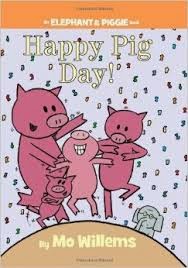
4. Happy Pig Day!
Willems, Mo.
|

5. I am going!
Willems, Mo.
|

6. Pigs make me sneeze!
Willems, Mo.
|

7. That is not a good idea!
Willems, Mo.
|

8. The blessing cup
Polacco, Patricia.
|

9. Creepy carrots!
Reynolds, Aaron, 1970-
|

10. A big guy took my ball!
Willems, Mo.
|
 Here is the backdrop for this conversation. Second graders are studying fables in library. We learned that fables are short, have animal characters, and have a lesson or moral. We read several examples of fables from around the world and now they are beginning to create their own fable in groups. The first step was that students had to come up with a lesson or a moral in their group. I asked students as a class to give an example of a lesson and one student answered, "Always buy preshrunk underwear." I thought, "Wow, this kid is a genius!" That night at dinner, I was telling my family the story and my son informed me that the student didn't think it up on his own, it was from Captain Underpants. I admit, I was a little deflated thinking that the kid wasn't going to be the next great philosopher like I thought. But...as I started to think more about it, this was still a good thing. While Captain Underpants isn't considered exactly exceptional literature with it's constant poopy and underwear talk, the student did actually read the book. He did understand the story he read. He was able to think critically and compare a story he read with traditional literature. And in terms of standards, he actually met the Grade 2 Common Core Standard RL.2.2. "Recount stories, including fables and folktales from diverse cultures, and determine their central message, lesson, or moral." I might even go so far as to say that he is exploring the Grade 4 Common Core Standard RL.4.9 "Compare and contrast the treatment of similar themes and topics and patterns of events in stories, myths, and traditional literature from different cultures." The moral of this story is, if you don't let kids explore the books they want to read, they'll never read on their own. And if they never read on their own, they'll never be able to connect it to all the great stuff they are learning in school and at home. The other moral of the story, school libraries are awesome places that have fun books to read that also support the Common Core Standards.

|
| ||||||
|
| ||||||
|
|
 |
| Reenactment |
.jpg)


.jpg)